



17 mag
Postato da: UP

ma nella carbonara, l’aglio ci va?

(0)

un tormentone pubblicitario di qualche annetto fa – almeno una decina – ci mostrava un plotone d’esecuzione della legione straniera nell’esercizio delle sue funzioni e il condannato che, invitato ad esprimere il suo ultimo desiderio, riusciva a prolungare all’infinito il momento. all’epoca “una telefonata allungava la vita” e il condannato a morte ci divertiva da morire anche quando chiedeva all’altro capo del telefono se la carbonara richiedeva l’aglio oppure no. io sono particolarmente riconoscente nei confronti di chi mi fa ridere, provo una forma d’affetto e il desiderio di ringraziare. massimo lopez – che naturalmente ricordiamo nelle indimenticabili performance col trio –  è venuto a mangiare da nonna betta e, com’era facile prevedere, è stato molto simpatico, gentile e alla mano. abbiamo giocato insieme agli acrostici e ha gustato le nostre specialità. ha detto che tornerà presto.

 
13 mag
Postato da: UP

c’è una carne che non diventa ciccia: il pesce.

(0)

Al via il giorno senza carne

Il giovedì solo menù verdi, si parte questa settimana, con politici e funzionari pubblici che daranno il buon esempio. Da settembre si aggiungono le mense scolastiche. Per ridurre la carbon footprint e combattere obesità e malattie.

di ALESSIA MANFREDI

Il logo della campagna

Giovedì zucchine, melanzane o insalata mista. Bistecca? Proibita. Succede in Belgio, più precisamente a Gand, la prima città amica dell’ambiente ad istituire ufficialmente un giorno alla settimana rigorosamente vegetariano. L’iniziativa presa nel cuore delle Fiandre orientali viene presentata oggi. E il “veggiedag” parte da questa settimana. Il buon esempio verrà dato in primis dai funzionari pubblici e dai politici, che, almeno il giovedì, rinunceranno all’amata fettina per virare decisamente su un menù verde. Da settembre toccherà poi ai bambini, cittadini consapevoli in erba, che alla mensa scolastica per un giorno non troveranno più la carne.

A dare l’annuncio ufficiale oggi è Tom Balthazar, consigliere comunale della città, che si occupa di salute e ambiente. E per far digerire meglio l’iniziativa ai più riluttanti, il comune ha invitato i cittadini a festeggiare e ad assaggiare spuntini gourmet – rigorosamente vegetariani – comunica la Eva, Ethical Vegetarian Alternative, organizzazione che ha cooperato alla creazione della campagna cittadina.

Gand è la prima ad ascoltare il monito a favore dell’ambiente lanciato dalle Nazioni Unite, anche se presto altre città in Belgio potrebbero seguire il suo esempio. Perché anche un piccolo passo può fare la differenza: secondo la Fao, il bestiame è responsabile del 18 per cento delle emissioni globali di gas serra e l’Onu ha rinnovato gli appelli a rinunciare al consumo di carne almeno una volta ogni sette giorni. Oltre a ridurre così la famigerata carbon footprint, – ovvero l’impatto ambientale – Gand vuole anche mandare un segnale contro l’obesità e promuovere un’alimentazione più equilibrata e sana, tagliando il colesterolo.


Si parte questa settimana. Con tanto di mappe che illustrano i percorsi vegetariani della città, evidenziando ristoranti, bar e mense che offrono menù in linea. E brochure e corsi di cucina tematici per ristoratori.

 
11 mag
Postato da: UP

l’uomo che non deve chiedere mai?

(0)

Pride and Arrogance
Rashi explains that komemiyut means ‘to stand erect’. ,2 This definition is not easily justified with other sources: The Talmud notes that to stand with koma z’kufa, a fully erect posture, is a sign of arrogance.


Our Rabbis taught: Six things are unbecoming for a scholar. … Some add that he should not take long strides nor carry himself with a fully erect posture … since a Master has said: If one walks with upright posture even for four cubits, it is as if he pushed against the heels of the Divine Presence, since it is written, ‘The whole earth is full of His glory.’ Talmud Bavli Berachot 43b

 
10 mag
Postato da: UP

nonna betta secondo eleonora di veroli

(0)

nonna betta

era come un’istituzione

se chiamava zi’ betta de ballone

ha comenzato a venne a varecchina

ma pe’ tutta ghette era ‘na reggina

bella, bona e ce sapeva fa’

e pe’ tutti c’era ‘na berachà

mò ‘o nepote umberto

pe’ dalli chavodde

ha aperto un ristorante 

e in tutta fretta e co’ tanto amore

l’ha chiamato nonna betta!


mazal tov

 
03 mag
Postato da: UP

benedetto sia il signore che tira fuori il pane dalla terra

(0)

Israele, presto sul mercato una nuova specie di grano                 
che prende il nome dal papa

Il quotidiano israeliano Maariv pubblica oggi la notizia di una nuova specie di grano messa a punto in Israele da un’equipe di scienziati dell’Istituto di ricerca agricola Volcani, guidati dal dottor Uri Kushnir che si chiamerà ‘Benedetto XVI’. La sua presentazione avverrà la settimana prossima in occasione dell’incontro a Gerusalemme fra il capo dello Stato Shimon Peres e il Pontefice. Questa nuova specie di grano, che sarà presto introdotta nel mercato israeliano, è caratterizzata da spighe alte fino a un metro, dotate di grande potere nutritivo, e particolarmente resistenti alle malattie. Con la ‘farina Benedetto XVI’ saranno in futuro prodotte pagnotte destinate in particolare ai pellegrini cristiani in visita in Israele.

 
30 apr
Postato da: UP

pezzetti fritti

(1)

la pastella, la più leggera, la più fluida e densamente sensuale, aspetta serena i suoi piccoli spasimanti, bambini e bambine che si tuffano a candela. affondano che sono pallidi come il primo giorno di vacanza e riemergono con una meravigliosa e scintillante carnagione dorata, orgogliosi di essere vegetali. quando sono in bocca, lo stesso rumore di ramo calpestato ed ecco che.

 
28 apr
Postato da: UP

la terza volta di secondome.com

(0)

http://www.secondome.com/nonna-betta/
Author: SecondoMe
Comment:
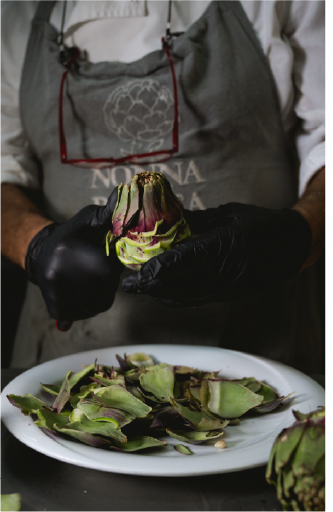
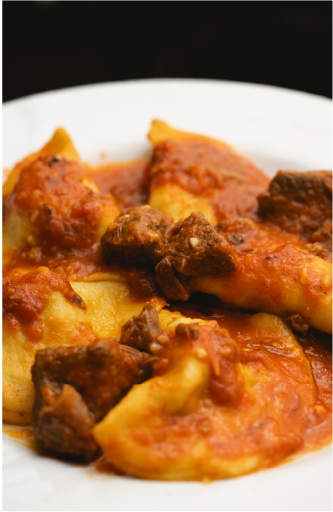
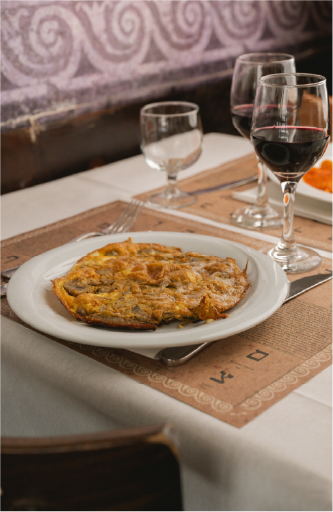
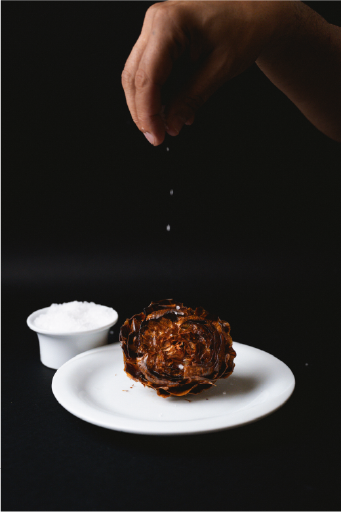
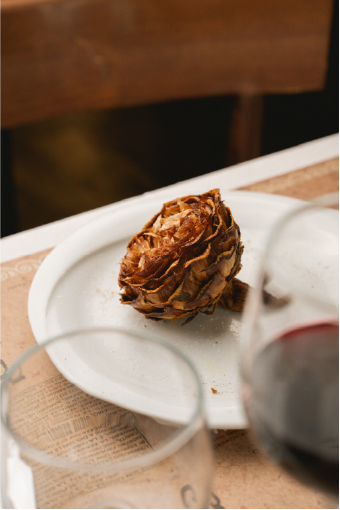
(tanto per aggiornarvi, ci sono stato ieri e tra le altre cose ho mangiato un carciofo alla giudìa squisito, croccante e per nulla unto, e una parmigiana di carciofi a dir poco favolosa, la consiglio di cuore a tutti!

 
16 apr
Postato da: UP

pomodori a mezzo

(0)

ad uno ad uno i pomodori si separano dalla loro dolce metà con un taglio netto come quello che si dà a una vita precedente. sulla loro parte intima finalmente svelata si lanciano il sale e il pepe come su carne viva. l’olio buono scende legato a un filo e dopo aver riempito i più misteriosi e reconditi interstizi, tracimando trascina con sé rivoletti di succo condito sul fondo della teglia. e poi in forno. il pane fatto in casa è un compagno ideale ma è difficile smettere.

 
15 apr
Postato da: UP

ariecchelo!

(0)

“ariecchelo!” urlavano i bambini del ghetto quando, finito pesach, correvano per le vie con una ciriola infilzata in un bastone.

immaginatemi così: ariecco nonna betta! (domani sera riapriamo).

 
06 apr
Postato da: UP

Singing the Exodus Story

(0)


My coming of age as a Jew, and, I imagine, yours as well, has a musical score, composed of various styles of our choosing. We choose the Jewish music we sing at home, in our congregations and around our Passover tables, at our happiest simchas (joyous occasions) and in our most difficult moments. Kay Kaufman Shelemay, an ethnomusicologist at Harvard, calls this scripting: By embracing and rejecting various styles of music, we actively shape our Jewish identity.

For many of us, the African-American spiritual “Let My People Go” is part of the soundscape of Passover Seders. This invented tradition is hardly new: many of us have sung “Go down Moses, way down in Egypt land” at Seders for more than forty years. How did this come to be? And, even more importantly, what does this musical choice teach us about the process of making the Seder experience relevant—to contemporary Jews—through music?

Historically, the inclusion of “Let My People Go” is connected with the Jewish commitment to the civil rights movement. The song was included in Arthur Waskow’s Freedom Seder (1969), which made use of an innovative haggadah that explicitly linked (through readings and songs) the Exodus fable with the struggle for civil rights. (A video of the original Seder was recently posted on YouTube.) But  this was not the first time Jews connected the struggles of blacks in America with the story of Jewish slavery in Egypt. As ethnomusicologists Judah Cohen and Marion Jacobs have pointed out, left wing Jews of the 1920s held “third” Seders that included African-American spirituals as a way to underscore the contemporary relevance of Passover’s message of liberation. 

When black slaves sang about the Exodus from Egypt, they were singing about their own struggles—in coded form. These spirituals could pass as worship and bible study, which slave masters were unlikely to interpret as incendiary. The Fisk Jubilee Singers, students at Fisk College who were emancipated slaves, performed and published this spiritual in the 1870s. Paul Robeson, the prominent actor, singer, and social activist, brought the song to a wider audience in the 1950s. For Jews active in the civil rights movement, the lyrics (“Go down Moses, way down in Egypt land/ tell old Pharaoh, Let my people go”) fit seamlessly into the Seder. And we loved the soulful music. Coming of age during the folk revival of the 1950s and 1960s, our tastes in popular music were shaped by African-American music—gospel, the blues, rock and roll. 

When I was growing up, I had many reasons for thinking that our Jewish community and the African-American community shared a kinship, and a common plight. (This was reinforced by my experience traveling in the deep South in the early 1960s and seeing signs on hotels, bathrooms and drinking fountains that “Blacks and Jews”—and I am prettifying the language here—were not welcome.) Common experiences of slavery and persecution were underscored by my family’s Holocaust stories. Even as I enjoyed white privilege, for years I maintained (incorrectly) that I wasn’t white; I was Jewish.

When I was 14, and my Jewish youth group advisors were driving to Mississippi in a beat-up Volkswagen bus for voter registration drives and to march on Washington, songs of the civil-rights struggle signified the core values that brought me into Jewish life: a passion for social justice, courage to take a stand and a belief that our tradition was actively committed to social change. Everything about my experience told me that “Let my People Go,” “Follow the Drinking Gourd,” “Oh, Freedom” and “We Shall Overcome” were part of my Jewish soundscape—“Hey Mary, don’t you weep, don’t you moan. Pharaoh’s army got drownded” has been part of our Seder for 30 years. True, the song has required certain textual emendations: Mary has been “returned” to Miriam, excising Christological references. To return to “Let My People Go,” it’s difficult to define what constitutes Jewish music. I generally favor the definition offered by ethnomusicologist Kurt Sachs, who said that Jewish music is music made forJews, by Jews, as Jews. Of course, part of the answer here is that the American Jewish experience is essentially an American experience, a truth underscored by historian Jonathan Sarna in his book,American Judaism (2004, Yale University Press). From my experience singing African-American spirituals at our Seders, I believe that passionate music, sung with purpose, from many traditions, has a place in our broader lives. We don’t have to include every moving piece of music, but if we want to deepen the music that flows out of us, we must listen, and sing, expansively. Music is energy and whatever comes in will find a way out, filtered through our own expression and experience. Ultimately, I think it’s less productive to put up walls and declare, “That music isn’t Jewish!” than to open ourselves up, asking instead, “How does this music move my heart as a Jew?”  


Jeffrey A. Summit is Associate Professor of Music at Tufts University, where he also serves as rabbi and Neubauer Executive Director of Tufts Hillel. He compiled and produced the CD “Abayudaya: Music From the Jewish People of Uganda” (Smithsonian Folkways Recordings), which was nominated for a Grammy Award.
« Articoli successiviArticoli precedenti »